Most of the skepticism around AI product photography comes down to one honest question: does it actually hold up, or does it just look fine in a thumbnail. It's a fair question. Here's where the two genuinely differ, and where they don't.
A real shoot gives you full creative control over a physical scene: exact lighting setups you can iterate on in the room, a real stylist adjusting the garment between takes, a client or art director seeing the result live and calling changes on the spot. If your brand identity depends on a specific real location, a specific real person's presence, or a physical production as part of the story, nothing artificial replaces that.
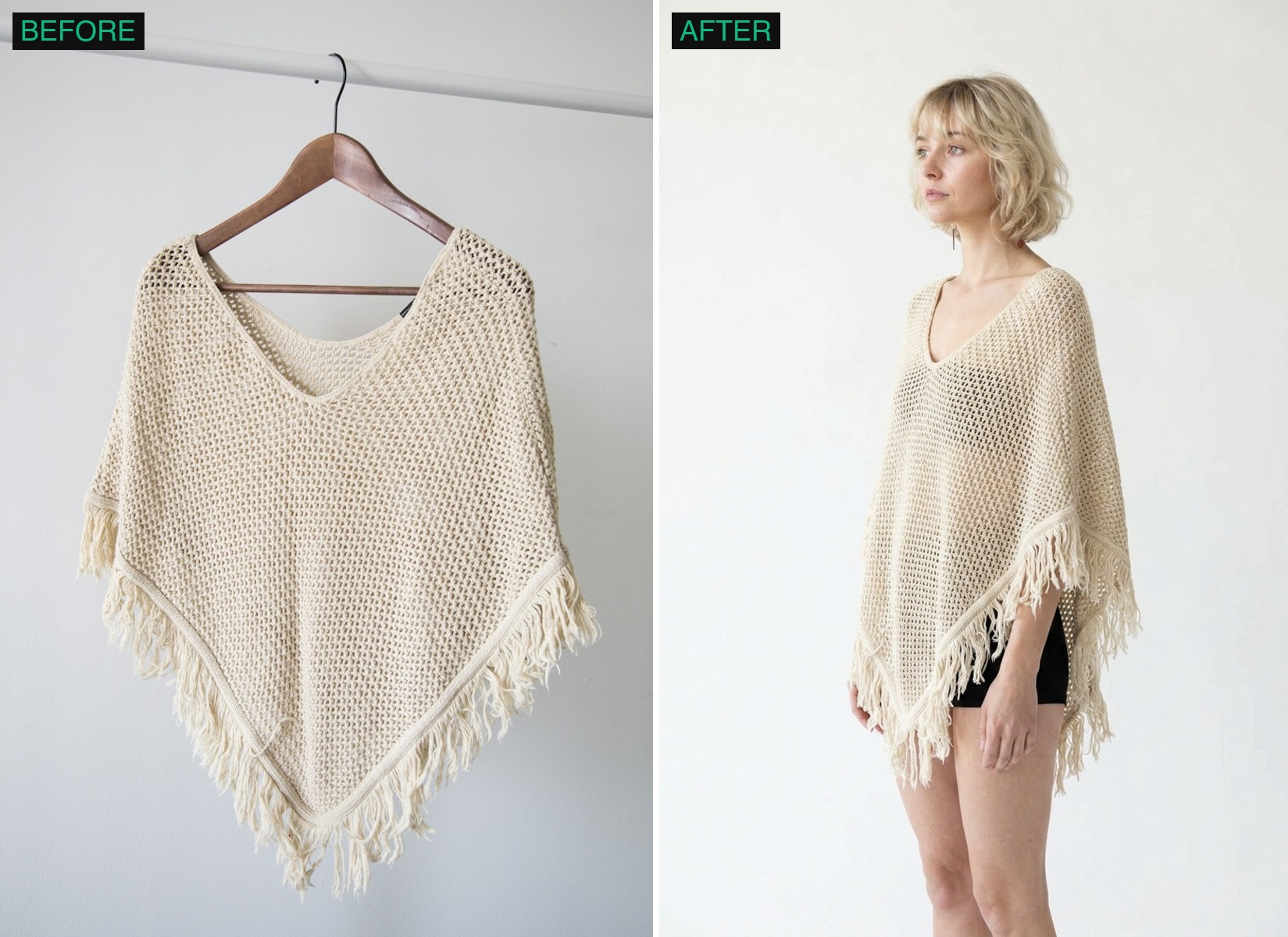
For straightforward catalog and on-model product images, the honest comparison is narrower than people expect. The garment itself, drape, fabric texture, how it sits on a body, is the thing that has to be convincing, and that's exactly the part that's improved fastest. The failure mode people remember (flat lighting, plasticky skin, a face that reads as obviously synthetic) is real, but it's specific to lower-effort tools, not an inherent limit of the category.
Where we hold ourselves to a harder bar: every render gets scored by an automated quality check before it's delivered, and anything that falls short doesn't get billed. That's a mechanism, not a marketing line, because the actual risk with AI imagery is shipping something that looks almost right and eroding trust in the catalog.
We're a newer entrant with a smaller public track record than the established players in this space. If you need a guarantee backed by years of case studies, that's a fair reason to wait. What we can show instead is the render itself, at full resolution, on your own garment.